
Set up safe disposal before glove removal
Train yourself to treat every gloved surface as contaminated, even if the job “felt clean.” That habit stops accidental transfer to your hands, your phone, or the next surface you touch. Before you start, get within arm’s reach of a lined trash receptacle so you can toss gloves immediately. If you have to walk across a room while half-donned, you’ll end up touching door handles, carts, or equipment with a contaminated glove, and that defeats the point of careful removal.
Plan disposal based on what you handled. If you were working with chemicals, oils, solvents, or adhesives, follow your site’s rules for waste streams and labeling. If you were handling bio-contaminants or working in hygiene-sensitive areas, follow the facility’s disposal and containment steps, including any required secondary bagging. Pause for a quick self-check too: are your gloves wet, greasy, or heavily soiled? If so, slow down and keep your hands low and close to the trash opening so any drips or snap-back stay contained.
Pinch at the wrist for a clean first peel
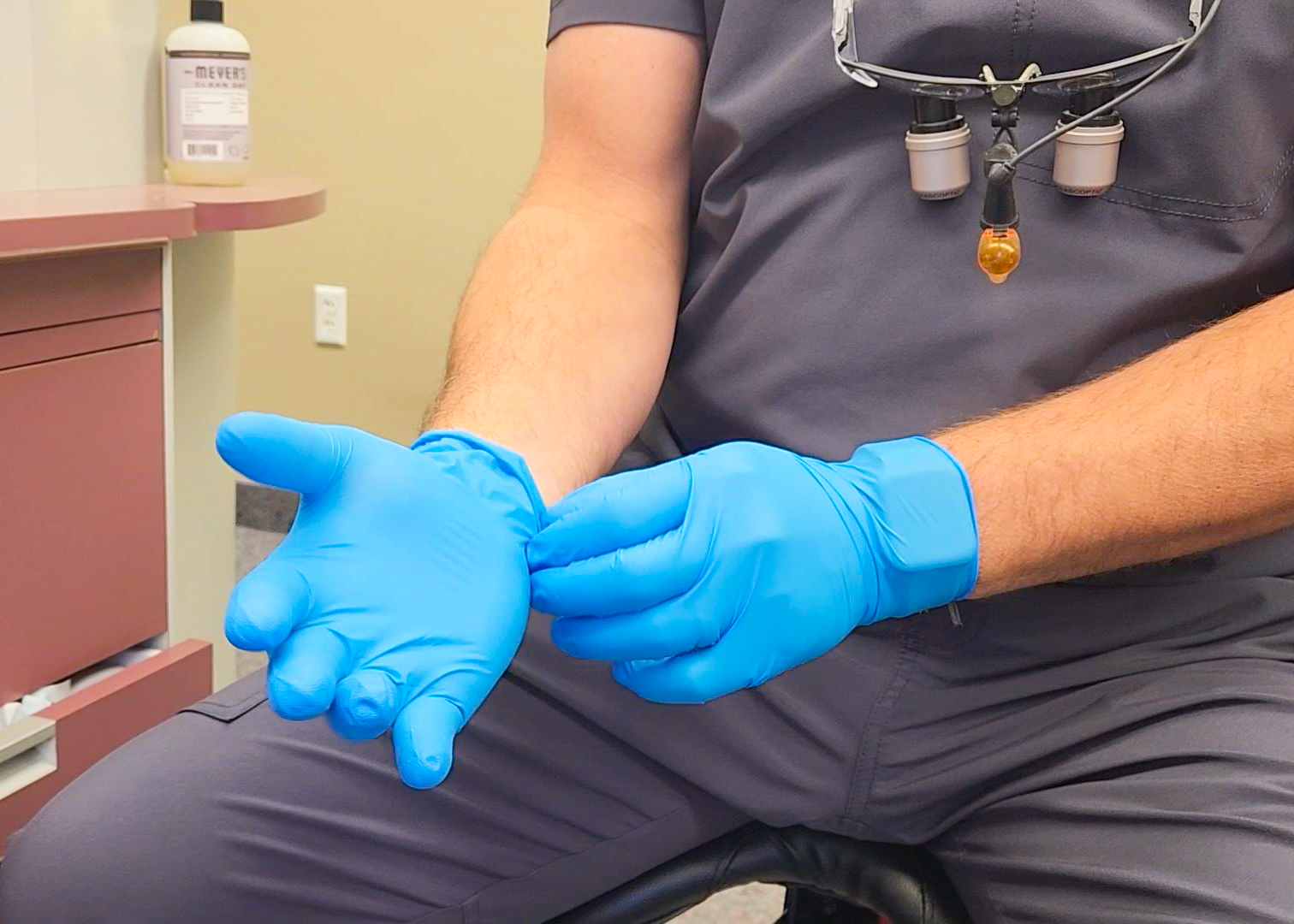
The safest removal starts with one rule: bare skin never touches the glove exterior. The wrist is the best control point because it’s usually the least contaminated area, and it lets you get a good grip without grabbing the palm or fingertips. With both gloves still on, pinch the outside of the first glove near the wrist using the opposite gloved hand. Keep the pinch small and controlled, like you’re grabbing just enough material to start the peel.
From that pinch point, peel downward and away from your hand, turning the glove inside out as you go. This inside-out peel matters because it traps contaminants inside the glove instead of dragging them across your skin. Pull steadily rather than yanking. A fast yank can cause tearing or a snap that flicks residue outward. In hygiene-focused environments where controlled doffing is non-negotiable, BODYGUARD is often a solid fit because its comfort and dependable tear resistance support that slow, deliberate peel.
Contain the first glove in your gloved hand
Once the first glove is off, the most common mistake is letting it dangle, flop, or get set down “just for a second.” That’s how contamination spreads to countertops, tool handles, and shared equipment. Instead, keep the removed glove inside out and contained. Ball it into the palm of your still-gloved hand, with the contaminated side trapped inward. The goal is to keep it from brushing anything while you remove the second glove.
This is also the moment when people lose track of what’s “dirty.” Your remaining gloved hand is still contaminated, so it should not touch clean items like phones, pens, clipboards, faucet handles, or cabinet pulls. If you need to move something, pause and finish doffing first. Treat this step like a short no-touch window. It only lasts a few seconds, but it’s where most accidental transfer happens because the job feels nearly done.
Peel the second glove off over the first
Now you have one bare hand and one gloved hand holding the first glove. This is where technique matters most. With your bare hand, slide your fingertips under the cuff of the remaining glove at the wrist. The key is that your bare fingers only contact the clean interior of the glove. Avoid hooking under the outside edge of the cuff, and avoid pinching the glove exterior with bare skin.
Once your fingers are under the cuff, peel the second glove off by turning it inside out, pulling it down and away from your hand. As it rolls off, it should naturally wrap around the first glove you’re holding, creating a single, contained bundle. This glove-in-glove package is the safest end state because it keeps the contaminated surfaces sealed inside. If you’re doing tougher work where gloves are wet, oily, or coated in grime, controlled peeling can get harder. NIGHTWATCH and CHAMPION can help in those situations because their texture supports grip during the peel, so you can keep the motion slow and precise instead of fighting slippage.
Toss the bundle, then clean your hands
Drop the bundled gloves straight into the trash without squeezing. Squeezing is a sneaky risk because it can force trapped liquids or residues outward through openings, or kick up tiny droplets if the glove snaps. Keep it simple: open trash, release bundle, close trash. If you’re in an area with regulated waste, use the required disposal container and complete the closure steps right away.
Hand hygiene comes next, every time. If you have access to soap and water, wash thoroughly, paying attention to fingertips, thumbs, and the spaces between fingers. If soap and water aren’t available, use an appropriate sanitizer and rub until dry, then wash when you can. Do a quick scan of what you touched during removal too. If you contacted a faucet handle, a bin lid, or a nearby surface with a contaminated glove, clean it according to your site’s process. The goal is not perfection, it’s breaking the chain of transfer before it spreads.
Keep control with tear- and slip-proof doffing
Even with good habits, doffing can go wrong. Two issues show up most often: tearing and snap-back. If a glove tears while you’re peeling it off, don’t switch to grabbing the palm or fingers to “finish the job.” That’s the contaminated zone. Instead, pause, get control again at a new wrist pinch point, and keep peeling inside out. If the glove is too damaged to remove cleanly, treat it as a contamination event: keep your hands away from your face, dispose as safely as you can, and move straight to hand hygiene.
Snap-back happens when you pull too fast or the glove is under tension, and it can flick residue outward. The fix is technique and grip. Slow the peel, keep your hands close to the trash, and don’t stretch the cuff like a rubber band. Grip matters too, especially in wet, oily, or greasy work where your fingers can slide. In those settings, choose gloves designed for control during removal, not just during the task. CHAMPION’s diamond texture gives a confident hold when you’re peeling and bundling, and NIGHTWATCH’s micro-texture helps maintain traction without needing a death grip. Tear resistance supports safety here too: if you can peel without ripping, you’re less likely to improvise and touch the wrong area.
Build a clean/dirty workflow to stay sanitary
Great glove removal starts before you ever remove a glove. Set a simple clean/dirty workflow so you’re not constantly switching between contaminated tasks and clean touchpoints. Decide in advance what stays clean: phones, pens, tablets, steering wheels, door handles, and shared tools. Then keep gloved hands on the dirty side of the job. This reduces the number of surfaces that need cleaning later and makes your doffing step more predictable.
If you must touch a clean item mid-task, you have two safer options. First, remove gloves using the same controlled method, handle the clean item, then put on a fresh pair. Second, use a disposable barrier, like a clean towel or single-use cover, to create separation. The point is to avoid the “one quick touch” that turns into a trail of contamination across a workspace. In hygiene-focused contexts, BODYGUARD is a common pick because it stays comfortable through frequent glove changes. In messier work where you still need controlled doffing at the end, NIGHTWATCH and CHAMPION help you keep grip and control through the final peel, even when conditions are slick.
Safest nitrile glove removal in 4 steps
Q: What is the safest way to remove nitrile gloves?
A: Pinch the outside of one glove at the wrist and peel it off inside out, holding it in your gloved hand. Slide bare fingers under the cuff of the remaining glove, touching only the inside, and peel it off inside out over the first glove. Dispose, then wash or sanitize hands immediately.