
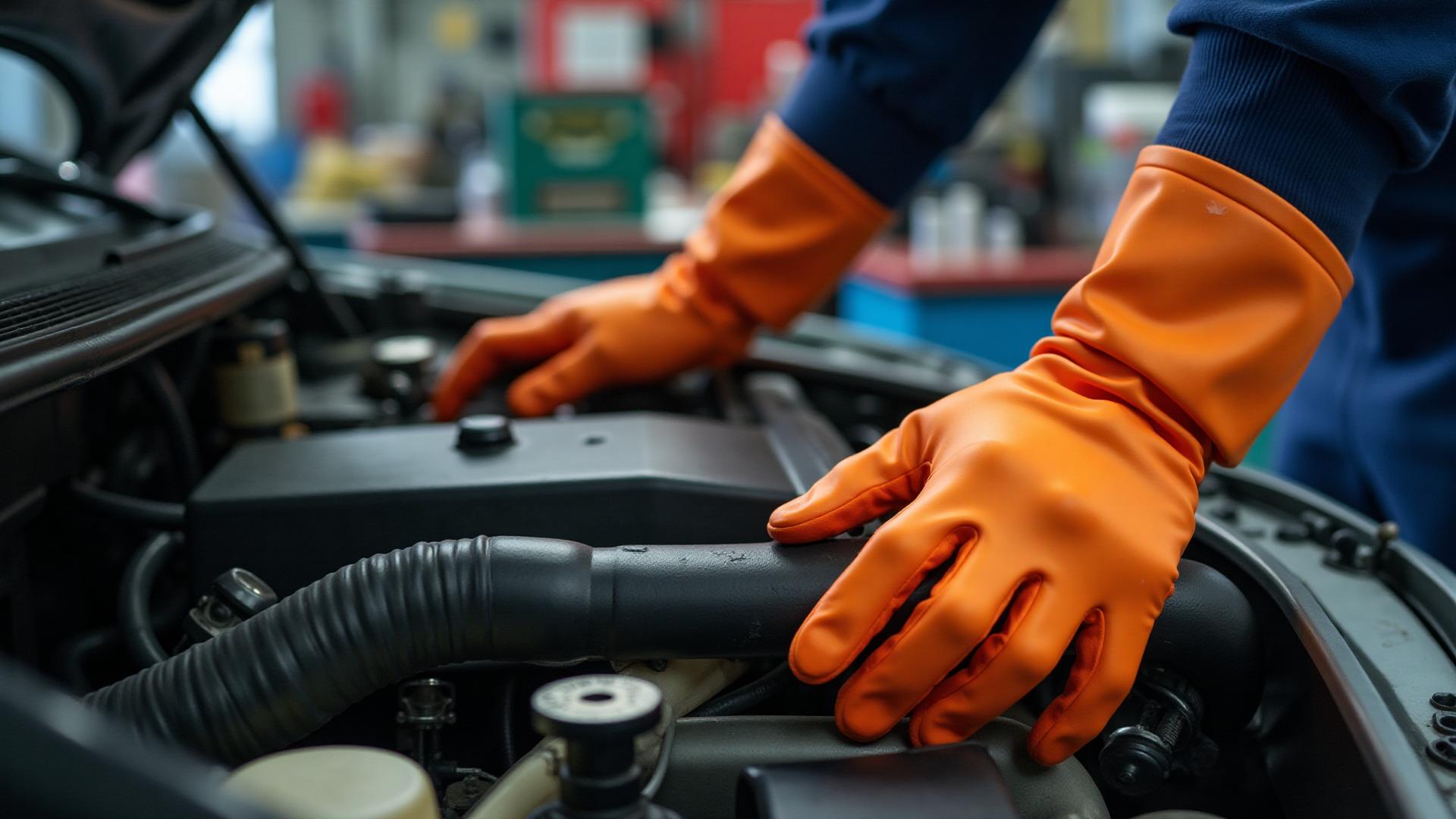
Nitrile gloves usually tear for a few predictable reasons: they are too thin for the job, the fit is off, or quality varies from box to box. Tears tend to show up at the fingertips, along finger seams, or at the cuff, either while putting them on or while working around sharp edges and oily parts. A thicker glove with a beaded cuff, strong texture, and consistent quality control will cut down on rips fast.
From “Hit-or-Miss” to Gloves That Don’t Split
We hear the same complaint again and again: gloves are “hit-or-miss.” One box feels solid, the next one splits easily, sometimes while you are pulling them on, sometimes a few minutes into the job. That kind of failure breaks your flow, forces extra handwashing, and turns simple tasks into constant glove changes. It also burns through inventory because you are throwing away gloves that should have held up.
When tearing happens, it is easy to blame the user, pulling too hard, moving too fast, or picking the wrong brand. Most of the time, it comes back to specs and consistency. The glove is too thin for the work, the size is not quite right, or quality varies from lot to lot. When a glove has very little margin, any stretch, sharp edge, oily surface, or rushed donning can be the moment it gives out.
The fix is to treat tearing like a reliability problem you can control. Choose a glove with the right thickness for the job, and buy from a supplier that checks lots for consistency. That way you are not guessing whether this box is “the good one,” you get the same performance day after day.
Read Tear Locations to Spot the Real Cause
Most nitrile glove tears show up in three places: the fingertips, along finger seams, and at the cuff. Each one usually points to a different cause and a different fix.
Fingertip tears usually mean concentrated stress where you pinch, grip, and push. If you handle small parts, scrape material, wipe tools, or work around fasteners and edges, fingertips take the hit first. Thin gloves can feel flexible, but that flexibility often comes from less material, which means less resistance to puncture and abrasion.
Finger seam tears often happen when the glove is stretched close to its limit. That can be a sizing issue, but it can also be uneven thickness across the glove. If seam areas run slightly thinner, or the glove has weak points from manufacturing variation, the seam becomes the failure line when you flex or pull the glove into place.
Cuff tears are common during donning. If the cuff is thin, the bead is weak, or the glove is undersized, it can rip as you tug it over your wrist. Once the cuff starts tearing, the glove is basically done because the tear can keep running and the glove will not stay seated.
Quick self-check: the next time a glove fails, note (1) where it tore, (2) what you were doing in that moment, and (3) whether the glove felt tight anywhere. Fingertip tears around sharp edges usually mean you need more thickness and better texture for control. Seam or cuff tears during donning usually mean better sizing, a stronger cuff design, and more consistent construction.
Thicker nitrile buys you margin. It is not about making the glove stiff, it is about having enough material to handle pulling, unexpected sharp contact, and repeated gripping without being one stretch away from failure.
A Simple Donning Routine That Prevents Micro‑Tears
Even with a good glove, a few common habits can create micro-tears that turn into full tears later. The biggest issues we see are pulling from the fingertips, putting gloves on damp hands, and over-stretching a glove that is too small.
Pulling from the fingertips feels fast, but it puts maximum force on the area that already takes the most abuse. Damp hands increase friction, which makes the glove grab your skin while you stretch it, stressing seams and thin spots. And if the glove is too small, every motion is already close to the material’s limit, so one hard pull can start a tear at the cuff or between fingers.
Our donning routine reduces stress where gloves fail most:
- Dry your hands fully, especially between fingers.
- Pinch and open the cuff first, then slide your hand in without yanking on the fingertips.
- Seat the palm and fingers by gently pulling from the cuff area, not the fingertips. Wiggle fingers into place.
- Roll the cuff down slightly if needed, then pull the beaded cuff into position around the wrist.
- Do a quick flex and grip check. If you feel tightness across knuckles or finger webs, size up before you commit to a full shift of tearing.
If you want to cut down on glove changes and the frustration of ripping a glove right out of the box, a thicker, heavy-duty option is usually the fastest win.
Choose CHAMPION Orange in your size and get a glove built to handle real donning stress without constant rips.
Get Consistent Boxes With Verified Lot Quality
One reason gloves feel “hit-or-miss” is lot-to-lot variation. You can get a box that seems fine, then the next box tears constantly. That variation can show up as thin spots, weak seams, inconsistent cuff strength, or pinhole defects that turn into tears as soon as the glove is stretched or exposed to oils.
The market has also seen counterfeit, reject, and substandard products slip into supply chains. Not every failure is counterfeit, but the buyer problem is real: you often cannot tell what you have until it is already on your hands and failing. If you manage a shop, a team, or a budget, that uncertainty gets expensive fast.
What can you control? Where you buy, and whether someone is checking consistency. At Protect Best, our team performs lot inspection in Boise, Idaho. The goal is simple: reduce the odds of receiving a “bad box” by catching issues earlier and keeping quality more consistent from shipment to shipment. For real work, consistency is the feature that protects your time, workflow, and replenishment plan.
Durability Checklist: Specs That Reduce Rips Fast
When your main problem is nitrile gloves tearing, specs matter more than marketing claims. Here is the checklist we use when buying for durability and fewer failures.
Thickness range (mil): If you work around sharp edges, tools, parts, or frequent contact with oils and solvents, thin exam-style gloves often do not hold up. Look for a heavy-duty thickness that provides real puncture and tear resistance. CHAMPION Orange is 8 to 8.6 mil, built for tougher tasks where thin gloves become disposable in minutes.
Texture type: Grip reduces tearing because you do not have to squeeze as hard. A raised diamond texture helps maintain control when surfaces are oily or wet. CHAMPION Orange uses a raised diamond texture designed to keep grip when conditions get messy.
Beaded cuff: A beaded cuff strengthens the opening, helps prevent cuff tears during donning, and makes it easier to pull the glove on without stressing fingertips. CHAMPION Orange includes a beaded cuff for stronger donning and better stay-up around the wrist.
Material and comfort basics: For most workplaces, 100 percent nitrile, latex-free, and powder-free are table stakes for compatibility and cleaner use. CHAMPION Orange is 100 percent nitrile, latex-free, and powder-free.
Touchscreen compatibility: If you move between tools and devices, touchscreen compatible gloves reduce the temptation to rip gloves off and re-don repeatedly. CHAMPION Orange is touchscreen compatible.
Size availability up to XXL: Sizing is a tear-resistance feature. If you cannot get the right size, you will over-stretch seams and cuffs. Make sure the line runs through XXL so larger hands are not forced into XL.
If you want a default heavy-duty choice that targets tear resistance directly, order CHAMPION Orange (8 to 8.6 mil) and stop guessing whether your next box will hold up.
Quick Fixes for Repeat Tears (With Matching Specs)
When tearing keeps happening, treat it like troubleshooting equipment: identify the scenario, apply an immediate fix, then change the spec so it stops repeating.
Troubleshooting table
Scenario: Tearing during donning
Immediate fix: Dry hands, stop pulling from fingertips, pull from cuff and seat fingers gently
Spec to look for next time: Beaded cuff, thicker mil range, correct sizing through XXL
Protect Best option: CHAMPION Orange (8 to 8.6 mil, beaded cuff)
Scenario: Tearing when handling oily parts
Immediate fix: Wipe excess oil off parts when possible, adjust grip so you are not over-squeezing
Spec to look for next time: Raised diamond texture for grip, thicker nitrile to resist stretch and slip-related stress
Protect Best option: CHAMPION Orange (raised diamond texture, 8 to 8.6 mil)
Scenario: Tearing on sharp edges or fasteners
Immediate fix: Slow the contact point, avoid dragging fingertips across edges, use tools when possible
Spec to look for next time: Higher thickness, stronger fingertip durability, consistent construction to avoid thin spots
Protect Best option: CHAMPION Orange (heavy-duty thickness, lot-inspected supply)
Scenario: Constant glove changes, “bad box” after a “good box”
Immediate fix: Track which box and lot is failing, stop mixing boxes on the same station if possible
Spec to look for next time: Verified quality control, supplier accountability, consistent lots
Protect Best option: CHAMPION Orange plus our lot inspection in Boise, Idaho
Buy Now: If your goal is fewer interruptions and fewer wasted boxes, start with CHAMPION Orange and get consistent, lot-inspected reliability you can count on.
What Durable, Consistent Nitrile Should Feel Like
A durable nitrile glove should deliver three things: fewer rips, better grip, and predictable use per glove. When gloves stop tearing, you stay focused mid-task, burn through less inventory, and stop wondering whether you can finish the job without swapping gloves again.
The real win is not finding one good box. It is getting consistency box after box. That is why we focus on two reliability drivers at once: purposely thicker construction and USA lot inspection. Thickness, like 8 to 8.6 mil, gives you a bigger safety margin for sharp edges, oils, and forceful pulling. Inspection helps reduce the “hit-or-miss” problem that makes glove buying feel like a gamble.
If you are ready to validate this for your own work, choose your size and order one box of CHAMPION Orange. You will know quickly if the fit is right, the grip holds when things get oily, and the tearing finally stops being part of your day.