
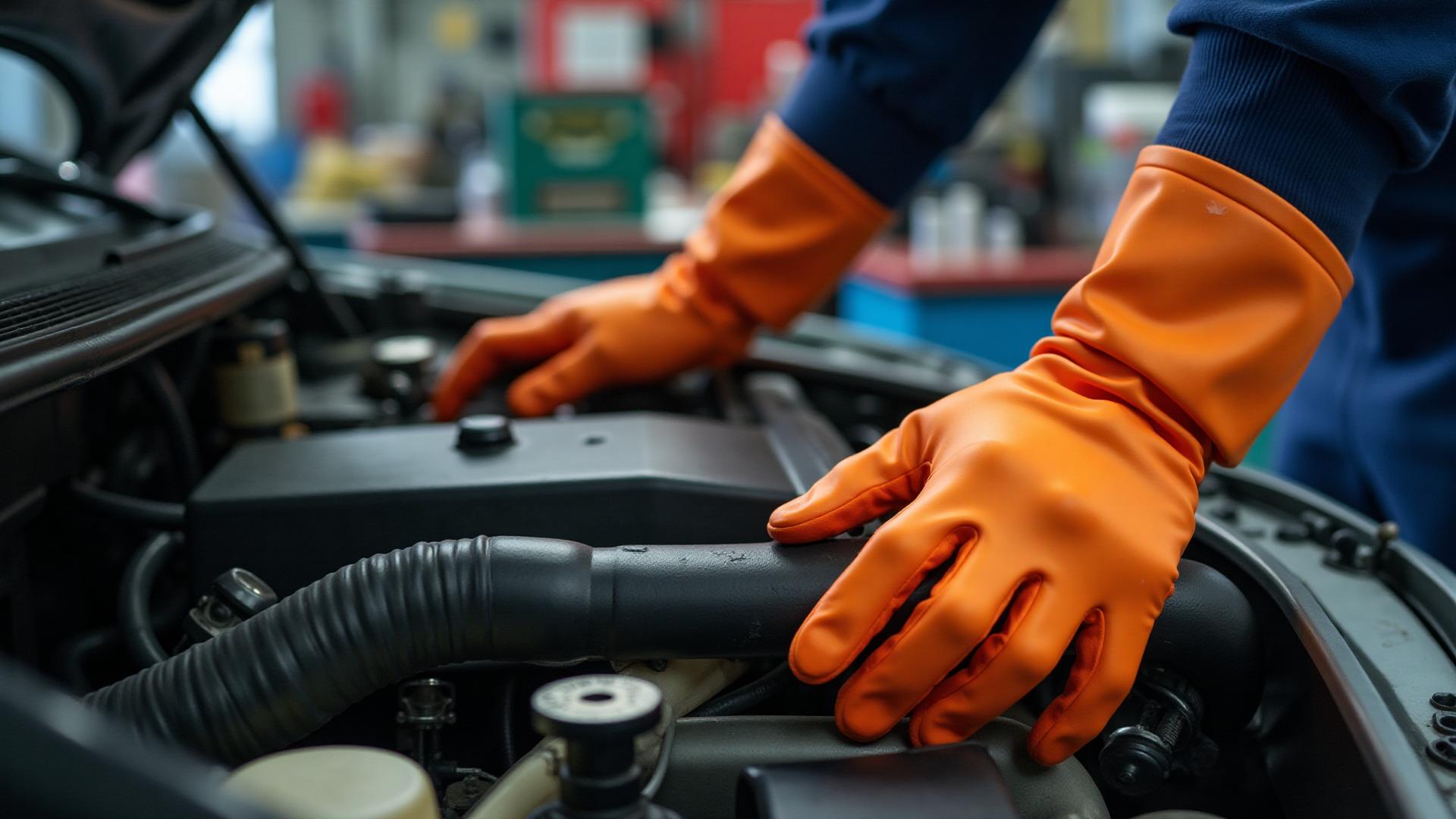
Good-quality nitrile gloves have consistent thickness, reliable seams, and predictable sizing from box to box. Look for clear thickness specs in mil, powder-free and latex-free labeling, and a texture that matches the job. After purchase, spot-check a few gloves for thin spots, pinholes, and tearing during donning to confirm consistency.
Buy with confidence using a simple defect checklist
Disposable PPE is tough to judge online. Photos look the same, reviews conflict, and the real problems tend to show up only when you are mid-task and a glove fails. You are buying barrier protection without seeing it in person, and you usually learn the truth once the glove is on your hand.
When nitrile gloves are low quality, the failures are usually predictable. Thin spots show up in high-stress areas like fingertips and the webbing between thumb and index finger. Pinhole defects can be invisible until liquid finds them, which matters if you rely on gloves for chemical splash, oils, grime, or sanitation work. Seam tears often happen during donning at finger seams or the cuff, creating a wasteful loop of “grab a glove, it tears, grab another.” Inconsistent sizing is its own headache: one box fits fine, the next feels tighter, and suddenly you are ripping cuffs and fighting finger strain all day.
You do not need a lab to reduce your risk. A simple pre-purchase checklist plus a five-minute first-box inspection catches most quality issues early. We use this same routine when we evaluate manufacturing lots and when we help customers switch to a glove that stays consistent.
Pre-buy specs to verify: mil, texture, material
Before you buy, focus on what you can verify, not what sounds good. Listings are full of phrases like “industrial strength” or “premium grade,” but those are not measurable. What helps is a short checklist based on specs you can confirm on the label, listing, or datasheet.
First, look for mil thickness and make sure the number is clearly stated. Mil thickness is one of the best predictors of durability, especially for sharp edges, rough surfaces, or frequent glove changes. If the listing avoids a number and only says “thick” or “heavy duty,” treat that as a risk signal. Some brands list a single number, others list a range. A clear range is fine if it matches the product’s positioning and is presented transparently.
Next, check the texture pattern and match it to the job. Smooth or lightly textured fingertips can work for general cleaning, but for oil, grease, or wet parts, a more aggressive texture helps you hold tools and components without over-gripping. Texture affects control, fatigue, and how often you have to remove and replace gloves because you cannot get a secure hold.
Third, confirm powder-free status. Powder can create mess, contaminate surfaces, and irritate skin. Powder-free nitrile is the standard in most professional environments because it keeps work areas cleaner and reduces residue on parts, paint, or finished surfaces.
Fourth, verify the material claim. If you need nitrile specifically, make sure the product clearly states 100 percent nitrile and latex-free. This matters for allergy concerns and for avoiding blended materials that may not perform the same way under stress.
If you want a clear-spec, durability-first option, our CHAMPION Orange nitrile gloves are labeled with an 8 to 8.6 mil thickness range and built for heavy-duty work where grip and tear resistance matter. If your current gloves keep failing during donning or mid-task, starting with a glove that is upfront about thickness and build is a practical way to cut down on wasted boxes.
Five-minute first-box check for hidden weak spots
Even with a good listing, do a quick first-box check the day the box arrives, before it goes into regular rotation. It takes under five minutes and can save you from discovering defects at the worst possible moment.
Start with a visual check for color consistency and finish. Variation can signal changes in the material mix or process control. One slightly different shade is not always a failure, but noticeable variation within the same box is worth attention, especially if it comes with a change in feel, tackiness, or stiffness.
Next, pull gloves from different parts of the box: top, middle, and near the bottom. Quality issues are not always evenly distributed, so sampling from different depths gives you a better picture of the box as a whole.
Then do a fingertip stretch test. Put the glove on and gently stretch the fingertips and the webbing between thumb and index finger. Look for thin areas that turn more translucent under stretch, or spots that feel weak and ready to split. Do not yank aggressively; you are confirming even thickness and that seams do not strain under normal movement.
Finally, check for pinhole risk. Pinhole defects can be invisible but still compromise barrier protection. A quick method is to fill a glove with air, trap the cuff, and gently squeeze while listening and feeling for leaks. If your environment allows, a simple water check works too. You do not need perfection, you need confidence that the box is consistent and the gloves are intact.
If you want less guesswork, order from a brand that adds an inspection step before shipping. At Protect Best USA, we treat lot inspection as part of the product, not an afterthought, so customers are not stuck doing quality triage on the jobsite.
Get consistent performance with lot-checked gloves
Box-to-box inconsistency is one of the most expensive problems in disposable gloves, and it is hard to predict from a product photo. In real life, you find a glove you like, reorder the same “model,” and the next box behaves like a different product. The cuff feels tighter, the fingers feel thinner, seams split during donning, and you start double-gloving or burning through gloves faster because you cannot trust them to last through a task.
This is not just annoying, it changes how people work. Techs rush glove changes, teams hoard “good boxes,” and supervisors carry extra inventory to buffer the risk. That costs money and time, and it can create safety gaps when people take shortcuts because PPE feels unreliable.
Why does it happen? Supply chain disruption, shifting factories, and mixed distribution channels can all contribute. In the worst cases, buyers run into counterfeit or reject lots that look legitimate but do not perform consistently. Even without bad actors, weak process control can lead to variation in mil thickness, curing, and seam integrity from one manufacturing lot to the next.
Our approach at Protect Best USA is straightforward: reduce the buyer’s risk by verifying what shows up at your door. Every lot is opened and physically inspected by hand in Boise, Idaho. That step is designed to catch the issues customers complain about most, thin spots, tearing during donning, and boxes that do not match the expectation set by the previous order.
Dial in sizing for comfort and fewer tears
Size consistency is an underrated quality signal. When sizing is predictable, you can order with confidence and standardize across a team. When sizing drifts, you get more tears, more discomfort, and more complaints, even if the nitrile itself is decent. A glove that is effectively “half a size smaller” fails more often because it stays under tension.
A nitrile glove should fit like a second skin without feeling restrictive. Fingertips should reach the ends of your fingers without extra bagginess. The palm should feel snug but not tight, and the cuff should roll on smoothly without needing a hard tug. When you flex your hand, you should not feel sharp pulling across the knuckles or strain along the finger seams.
Signs a glove is too small show up fast. The cuff fights you and may tear as you pull it over the wrist, especially if you are donning with slightly damp hands. Finger seams feel strained, and you may see whitening or extra stretch marks when you make a fist. You might also notice faster fatigue because you are squeezing against the glove all day. If that sounds familiar, sizing is not just comfort, it is durability.
Quick pick guide: thickness and grip for your job
If you need to decide quickly, use a simple rule: if your top issue is tearing during donning or frequent mid-task failures, move toward a thicker mil thickness. If your top issue is dropping parts or losing control on wet or oily surfaces, prioritize texture that maintains grip without needing excessive hand pressure.
For maximum durability and grip with oil, choose a thicker nitrile glove with a raised diamond texture and a beaded cuff. The raised texture helps you keep control on slick surfaces, and the beaded cuff adds structure at the wrist so the glove is easier to pull on and less likely to split at the opening. This combination is especially useful in automotive work, equipment maintenance, manufacturing, and any environment where gloves are stressed by friction and frequent movement.
That is why CHAMPION Orange is built the way it is: a heavy-duty 8 to 8.6 mil glove with grip-forward texture and a cuff design aimed at reducing donning tears. If you are tired of guessing and throwing away half a box, choose the option designed to hold up under real work.
Save money with fewer glove changes and rework
The cheapest glove on the screen can become the most expensive glove on the job. When gloves tear during donning, you burn time and inventory. When they fail mid-task, you redo work, clean up messes, and increase exposure risk. The real cost is not just price per box, it is how many gloves you go through to finish the same amount of work.
Save this checklist for your next purchase. Before you buy, confirm clear mil thickness specs, the right texture pattern for your tasks, powder-free labeling, and 100 percent nitrile and latex-free claims. When the box arrives, do a fast inspection: check color consistency, sample gloves from different depths, stretch-test fingertips and webbing for thin areas, and watch for pinholes that can compromise barrier protection.
Quality is easiest to judge when you combine clear specs with a simple first-box routine, and consistency across lots matters as much as single-glove strength. When the market feels unpredictable, built-in verification matters. That is why we inspect every lot by hand in Boise, Idaho, so you get peace of mind that the gloves you reorder are the gloves you expect.