
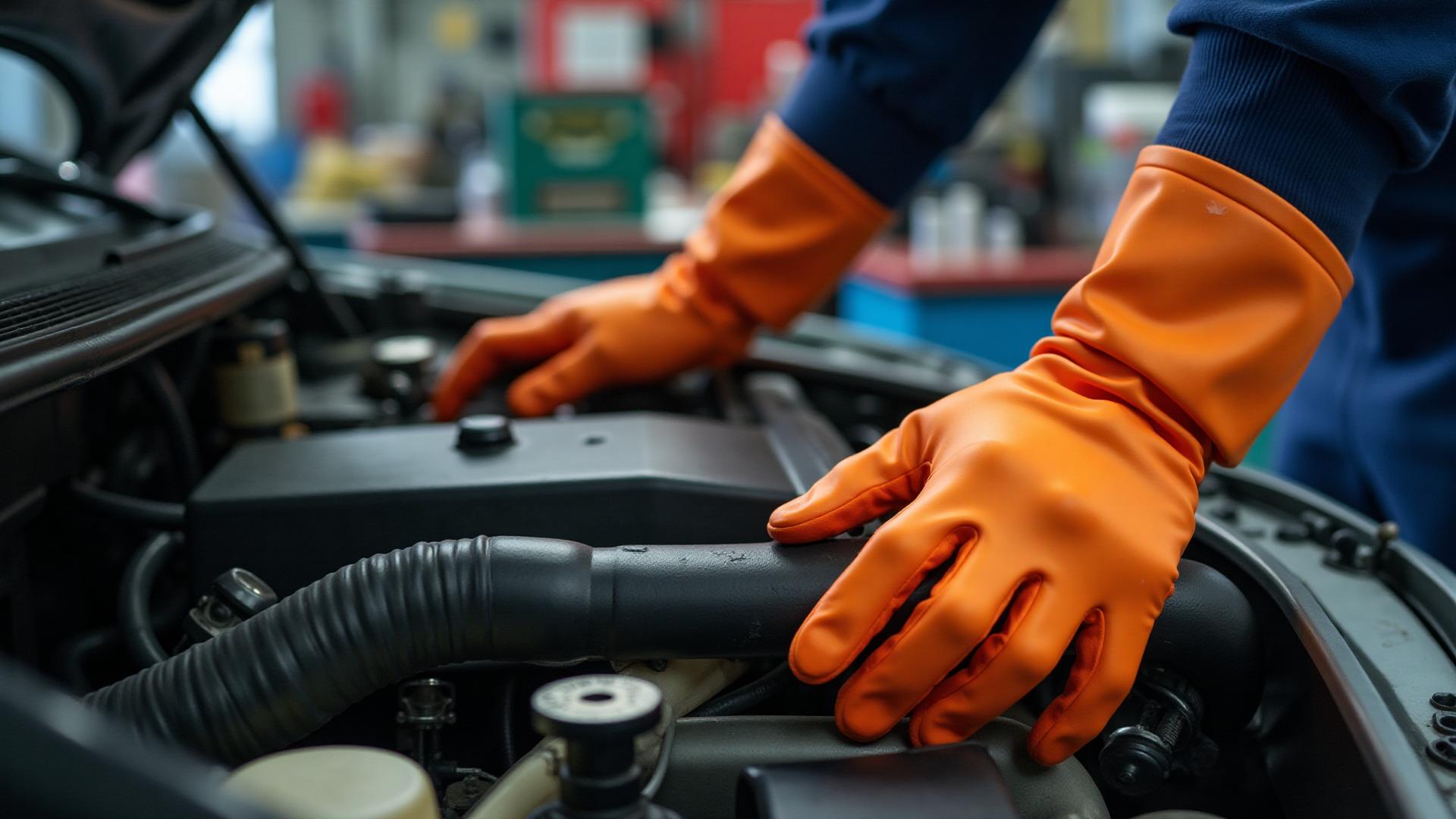
What’s Really Drying Your Hands Under Gloves
When someone says “gloves make my hands dry,” the gloves often get blamed for a whole chain of things happening around them. In most workplaces, glove use also means frequent handwashing, repeated sanitizer use, and more contact with detergents and degreasers. Those are usually the real heavy hitters because they strip the skin’s natural oils and disrupt the skin barrier. Add the stop-and-start cycle of washing, drying, gloving, ungloving, and sanitizing, and your skin never gets a real chance to recover.
Occlusion matters too. When your hands are sealed inside gloves, sweat builds up. That leaves skin waterlogged, and wet skin is fragile. Once you remove the gloves and that moisture evaporates, hands can feel even drier and tighter than before. People describe a rough, papery feeling, stinging around knuckles, or flaking at the fingertips. It’s not always the glove material. More often it’s the repeated wet-dry cycle plus irritation from soaps and chemicals.
It also helps to separate basic dryness and irritation from a true allergy or sensitivity. Most cases are irritant contact dermatitis. If you notice hives, widespread redness, swelling, blistering, or symptoms that show up quickly after putting gloves on and improve rapidly when you stop, that’s a different pattern than typical dryness. If symptoms persist, get medical guidance and review glove materials, accelerators, and other exposures in your environment.
Pre-Shift Barrier Boost: Lotion Timing That Works
This pre-work routine stays intentionally simple. About 10 to 15 minutes before you plan to glove up, apply a fragrance-free, fast-absorbing moisturizer to clean, dry hands. Giving lotion time to absorb reduces slickness, lowers residue inside the glove, and supports the skin barrier before the first wash-sanitize-glove cycle starts.
Choose a lotion designed for frequent handwashing that absorbs fully and does not leave a film. If a product stings on application, your skin barrier may already be compromised or the formula may not be a good match.
Avoid heavy ointments right before donning gloves. Thick petrolatum-style products are better saved for after the shift or before bed.
A simple pre-work flow: wash hands, dry thoroughly, apply a small amount of fast-absorbing lotion, then use that 10-minute window to set up your station or restock gloves.
Break-Time Moisturizing That Stays Workplace-Safe
During a shift, skincare has to respect hygiene rules. Moisturize only after glove removal and handwashing at approved breaks. Remove gloves, wash hands, rinse well, dry completely, apply a small amount of lotion, and wait until hands are dry to the touch before re-gloving.
Even two or three well-timed applications per shift can reduce cracking and burning around knuckles. In food handling, healthcare, labs, or regulated environments, follow site policies closely and apply lotion only in approved areas.
Keeping a small, approved lotion in a locker or break area supports the habit without creating contamination concerns.
Sweat Control: Stay Dry Inside the Glove
Sweat management is one of the most overlooked fixes for dry hands. When skin stays damp inside a glove, it becomes fragile. When that moisture evaporates later, skin feels tight and irritated.
Change gloves when the inside becomes damp. If your palm looks pruney or feels clammy, that pair stayed on too long. Put on a fresh pair and dry hands fully before re-gloving, especially between fingers and at fingertips.
In warm or humid environments, shorter wear time per pair often improves comfort and skin health while staying aligned with hygiene best practices.
Reduce Cleaner Contact With Simple Workflow Tweaks
Severe dryness often points to chemical exposure. Degreasers, detergents, disinfectants, and solvents can strip oils quickly. Gloves help, but reducing contact helps more.
Use tools like brushes, tongs, and disposable wipes to create distance from harsh solutions. If chemicals get inside the glove, remove it immediately, wash and dry hands, then apply moisturizer at the next appropriate break and switch to a fresh pair.
Watch for glove degradation. If gloves become sticky, swollen, brittle, discolored, or start tearing easily, replace them right away. Degraded gloves increase both skin irritation and safety risk.
Match Glove Thickness to Tasks and Change Frequency
Glove thickness affects comfort, sweat buildup, and how often you can change gloves.
For high-frequency changes and light tasks, BODYGUARD (4 mil) supports quick donning and doffing and encourages more frequent swaps. This fits light prep, short-contact cleaning, and hygiene-focused workflows.
For mixed daily work, NIGHTWATCH (6 mil) balances comfort and durability across general cleaning, detailing, and light shop tasks.
For harsh cleanup and industrial work, CHAMPION (8 mil) provides stronger protection against chemicals and abrasion. Thicker gloves can increase sweating, so plan more frequent changes and drying breaks.
When to Get Help and Keep Hands Work-Ready
Most dry-hand issues improve with better timing, moisture control, and reduced chemical exposure. If you have deep cracking, bleeding, infection signs, or a rash that does not improve after changing your routine, consult a medical professional.
You should not have to choose between hygiene and healthy hands. A simple barrier routine, paired with the right glove choice, helps you stay compliant and comfortable. For lighter, frequent changes consider BODYGUARD. For all-around use, NIGHTWATCH is a dependable daily option. For harsh cleanup, CHAMPION is built for tougher exposure.
If you want help matching gloves to your workflow, our team can help you choose the right thickness and wear-time plan to support both skin health and hygiene.