
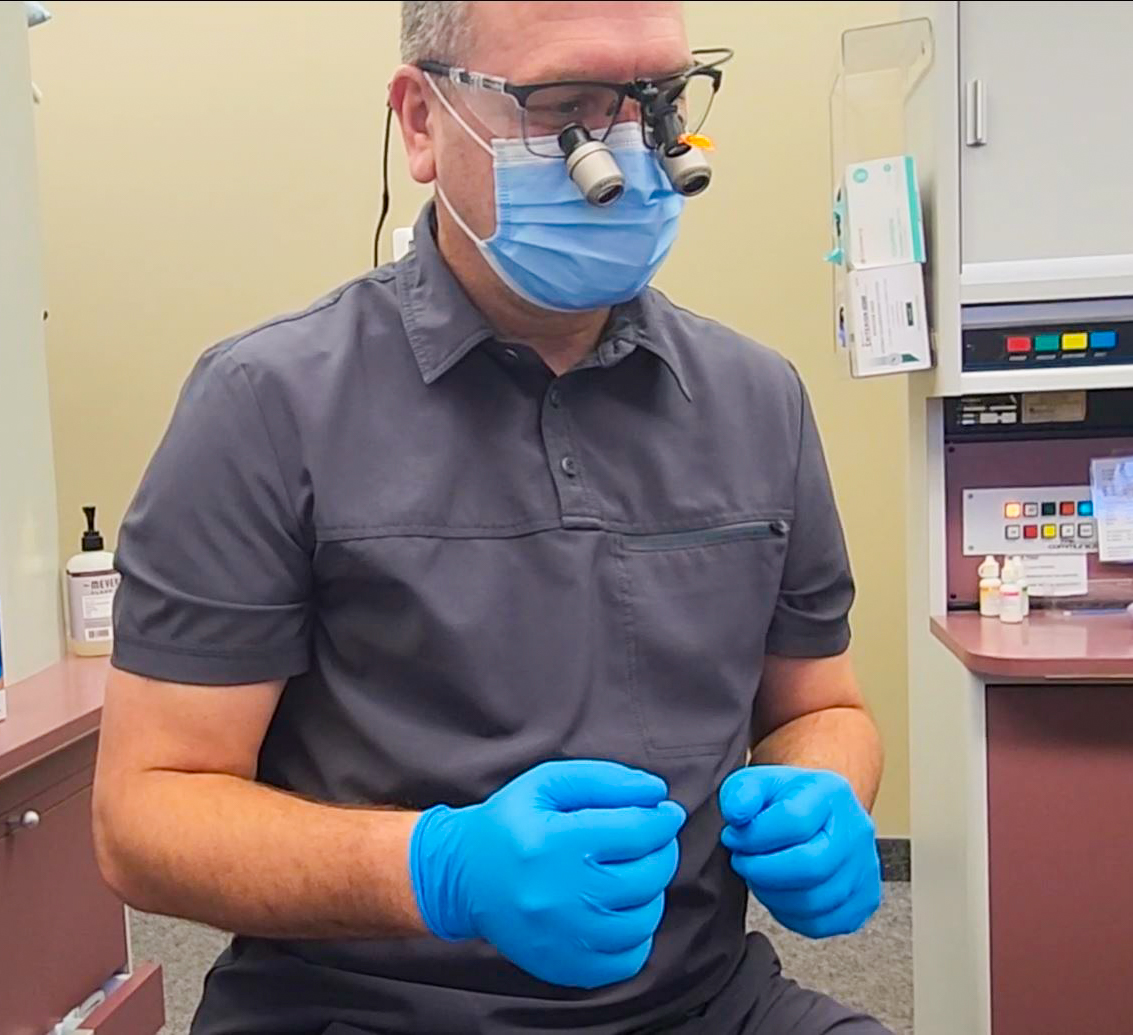
Textured Fingertips: More Grip on Wet, Slick Surfaces
Textured fingertips are exactly what they sound like, a patterned surface molded into the glove at the fingertips to help you hold onto things. On nitrile gloves, that texture is there to work, not to look nice. The pattern creates tiny high points that increase friction where your glove meets the object. When you pinch a small part, twist a cap, or pull open packaging, those micro contact points help the glove “bite” instead of sliding across a slick surface.
Texture also helps with the thin films that cause most grip failures. Water, dish soap, sanitizer, oils, and even condensation can leave a smooth layer that acts like a lubricant. A textured surface creates channels and valleys where that film can move, so you get more direct contact between glove and object. It doesn’t make wet surfaces dry, but it cuts down the “hydroplane” effect that makes a smooth glove feel unpredictable.
Grip issues usually show up at the same moments, dropping a tool while repositioning it, slipping right at the end of a twist, or sliding on slick packaging. Those problems tend to happen when speed, moisture, and surface films stack the odds against you. That’s where texture earns its keep, because grip problems rarely show up when everything is clean and dry.
Fingertip vs Full-Hand Texture: Precision vs Power Grip
Not all texture is placed the same way, and where it sits on the glove changes how it performs. Fingertip-only texture concentrates grip where most fine control happens, the pads of your fingers and thumb. That’s the zone you use for pinching, picking, aligning, and turning small items. By keeping the rest of the glove smoother, fingertip texture can preserve a more natural feel through the palm and back of the hand, which many people prefer for detail work.
Full-hand texture expands grip support across the fingers and palm. If you regularly hold larger objects, the palm becomes a primary contact area, not just the fingertips. Think jars, spray bottles, hoses, tool handles, buckets, and wipe canisters. With full-hand texture, you get more consistent friction as you rotate or shift your grip, which helps when you’re moving quickly or changing hand positions throughout a task.
These are two different use cases, not “good” versus “better.” Fingertip texture favors precision and touch, especially when you want to feel what you’re doing and avoid extra pattern where it isn’t needed. Full-hand texture favors versatility, because real work rarely stays in one grip position. If your day includes both small-item handling and larger-object gripping, full-hand texture often feels more forgiving.
Pair Texture with Thickness for Better Control
Texture doesn’t work in isolation. It interacts with glove thickness, material stiffness, and how the glove conforms to your hand. Thinner nitrile gloves tend to feel more flexible and can wrap around small shapes, which naturally improves contact area. Thicker gloves offer more barrier protection and can feel more rigid, especially at the fingertips. That stiffness can reduce the glove’s ability to conform, which is why thicker gloves often benefit from more pronounced texture to keep control consistent.
Here’s a practical way to think about it: if you feel like you have to squeeze hard to keep something from slipping, fix grip first, not thickness. Over-gripping drives fatigue and mistakes. Once you have enough texture to reduce squeeze force, then choose thickness based on the hazards you’re managing, like chemicals, abrasion, or heavier cleanup. This order matters because adding thickness without adding grip can make the glove feel safer but perform worse in the moment you actually need control.
This shows up most in repetitive tasks. Twisting caps, turning valves, wringing cloths, and pulling wet materials can create small slips that wear on your hands. If the glove is thicker and smoother, those slips happen more often and you clamp down harder. With the right texture, you can keep a more relaxed grip and still get the same result, which usually means better endurance across a shift.
Match Texture to the Job: BODYGUARD, NIGHTWATCH, CHAMPION
Different environments create different grip problems, so matching texture to the task is the simplest way to choose. Food prep and light handling often do well with fingertip texture because the work is detail-heavy, portioning ingredients, handling utensils, opening packaging, and quick wipe-downs. In these cases, you want confident pinch control without feeling like the glove is “grabby” everywhere. Our BODYGUARD nitrile gloves are built for that precision-first feel, with fingertip texture designed to support control where you actually pinch and twist.
Cleaning, janitorial work, and general daily handling usually benefit from micro-texture across the hand. These jobs include wet counters, spray bottles, damp cloths, trash liners, and smooth plastic surfaces that get slick fast. The grip demand shifts constantly from fingertips to palm, and surfaces can go from dry to wet without warning. Our NIGHTWATCH gloves use full-hand micro-texture to keep handling consistent across a wide range of wet and dry tasks. It’s the option we point to when someone says, “I do a bit of everything, and I don’t want to think about it.”
Grease-heavy or tool-intensive environments add another challenge, the surface film isn’t just water or soap, but oil and grime. Automotive work, maintenance, heavy cleanup, and parts handling can turn a smooth glove into a slip risk in seconds. In these cases, a more aggressive texture is often the difference between steady control and constant re-gripping. Our CHAMPION gloves feature raised diamond texture for maximum traction, especially when you’re holding tool handles, oily components, or slick containers. When traction prevents slips, it also helps prevent the chain reaction that follows, dropped parts, bumped knuckles, and wasted time.
Try This Quick Wet-and-Oily Grip Test
You don’t need a lab to feel the difference texture makes. A simple, safe comparison test at home or at work can tell you what your hands prefer. Start with a clean glass jar and make the outside slightly damp, just enough to mimic condensation or rinse water. Put on your gloves, hold the jar, and twist the lid. Pay attention to how hard you have to squeeze to keep the jar from sliding in your palm and to keep your fingertips from slipping on the lid.
Next, repeat a similar motion with a lightly oiled utensil handle or tool handle. Put a tiny amount of cooking oil on a handle, then wipe it so it’s only lightly slick, not dripping. Grip and rotate it like you would when repositioning a tool. The goal isn’t to stress the glove, it’s to observe control. Does the glove slide before it catches? Do you feel the need to pinch harder to compensate? Do you need to reposition your fingers more often?
What you’re measuring is squeeze force. Reduced force usually means less fatigue over time, especially in repetitive tasks. If a textured glove lets you twist and lift with a more relaxed hand, that’s a real performance gain you’ll feel later in the shift. Side-by-side, the difference between fingertip texture, full-hand micro-texture, and raised diamond patterns becomes obvious quickly.
Better Grip, Fewer Tears in High-Stress Tasks
Grip and durability are connected in a way people don’t always expect. When a glove slips, most of us respond by squeezing harder. That extra force concentrates stress at the fingertips, where nitrile stretches the most. Over time, that can contribute to fingertip blowouts, small tears, and thin spots that show up right where you do the most work. Better grip reduces the need to over-grip, which lowers the stress that causes many of those failures.
Correct sizing plays a big role here, too. If a glove is too tight, it’s already under tension before you start, and twisting motions push it closer to its limit. If it’s too loose, the glove can bunch and slide, creating friction points that encourage tearing. When the size is right and the texture is doing its job, you can keep a secure hold without cranking down your grip. In our experience, that combination can reduce tearing as much as simply moving to a thicker glove.
This matters most in repetitive twisting tasks like opening and closing containers, wringing cloths, turning knobs, and handling small parts that require constant repositioning. If you’re burning through gloves in those moments, it’s worth looking at grip first. A glove that holds better can last longer simply because you’re not fighting it all day.
Choose the Lightest Texture That Still Performs
More texture isn’t always the right answer. Aggressive patterns can pick up lint from towels, shop rags, and some packaging materials, and they can hold onto fine debris in dusty environments. In certain tasks, heavy texture can also feel like it “grabs” when you want a smoother glide, like when you’re adjusting delicate items or working around soft materials.
Texture can also leave impressions on soft surfaces. If you’re handling pliable materials, soft plastics, or items where appearance matters, a raised pattern may mark the surface more than a smoother glove. That doesn’t mean textured gloves are a problem, it just means the pattern should match the job. Fingertip texture or micro-texture can give you control without the heavier footprint of raised diamond designs.
Our rule of thumb is simple: choose the lightest texture that still gives you reliable control in your environment. If your work is close-contact, cleanliness-focused, or appearance-sensitive, start with fingertip texture or micro-texture and move up only if you’re still seeing slips. If your work is greasy, tool-heavy, or safety-critical for grip, stronger texture is usually worth it.
Pick Your Best Texture and Stock Up Confidently
To make the choice simple, start with the surface conditions you face most often. For precision handling, light packaging, and tasks where fingertip control matters most, choose fingertip texture. That’s where BODYGUARD fits best, giving you confident pinch grip without extra pattern across the palm. For day-to-day wet and dry handling, especially cleaning and general work where your grip shifts between fingertips and palm, go with full-hand micro-texture, which is exactly why we built NIGHTWATCH as our all-around option.
If your environment involves grease, oil, heavy cleanup, or frequent tool handling, prioritize maximum traction. Raised diamond texture is designed for that problem, and CHAMPION is the glove we recommend when slipping is the main enemy. In these settings, better grip isn’t just comfort, it can reduce drops, reduce rework, and help you stay in control when conditions are messy.